Slot Near Miss Psychology: Why It Teases
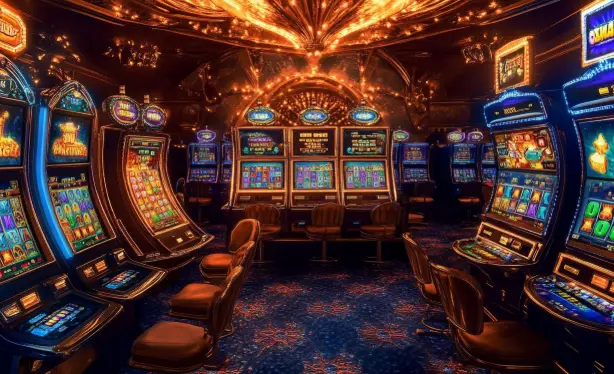
The near miss is not an accident of reel geometry—it is a precision-engineered psychological lever, and anyone who claims otherwise has never cracked open a slot's payout table. When three symbols align except for one reel stopping a single pixel short, your brain does not register a loss. It registers a promise. That distinction is worth billions to operators and costs players their bankrolls every single night. 🎰
The Neuroscience Behind the Tease
Functional imaging studies on gamblers show that near misses activate the same mesolimbic reward circuitry as actual wins—dopamine floods the ventral striatum even though no money changes hands. The slot near miss psychology exploit is brutally elegant: your reward system cannot distinguish between almost and actual. Operators know this. The reel-strip mapping on modern video slots is deliberately weighted so that near-miss configurations appear far more frequently than statistical randomness would dictate—sometimes three to five times more often. That is not chance. That is calibration.

Reel Mapping and the Illusion of Imminence
Here is where the hardware gets dirty. Physical reel strips and their virtual counterparts are not uniform. Symbols are spaced with surgical intent, clustering high-value icons adjacent to the payline so that they "almost" land with alarming regularity. A skilled slot technician will tell you the near miss frequency is a tunable parameter, not a fixed constant. Adjust the virtual reel mapping and you can dial up the tease without touching the base game's return-to-player percentage. The math stays legal while the psychology gets weaponized. ⚙️
This is the part regulators rarely scrutinize with enough aggression: the RTP is honest, but the near-miss distribution is a separate axis entirely. A machine can pay back 96 percent over a million spins while deliberately starving you of clean losses—serving up agonizing almosts that feel like momentum. The tease is the product.
Why Your Brain Refuses to Walk Away
The near miss triggers what researchers call cognitive regret—the counterfactual loop where your mind replays the spin and generates a "if only" narrative. That loop is addictive because it feels like learning. You become convinced you are close to cracking the pattern, that the next spin corrects the injustice. Slot designers lean into this hard with bonus-tease animations: the screen shakes, the reels slow, a scatter symbol hovers at the edge of the trigger zone. 🧠
The slot near miss effect intensifies under speed. Faster spin cycles compress the regret window, preventing your prefrontal cortex from reasserting rational control. Autoplay features are the final insult—they strip away the physical act of pressing spin, leaving you in a passive trance where near misses wash over you in a continuous stream. The tease becomes ambient.
The Operator's Playbook and the Player's Blind Spot
Audit any modern slot's par sheet and you will find the near-miss distribution treated as a marketing variable, not a fairness concern. Operators defend it as entertainment value. I call it what it is: a calculated exploitation of prediction error signaling. Your brain releases dopamine on the expectation of reward, and the near miss is the cheapest possible way to trigger that expectation without paying a cent. The tease is not a bug in the design—it is the design, tuned to keep your hand on the button long after your bankroll should have told you to stop.
Watch the reel deceleration on your next session. Count how many times the final symbol lands one position off the payline compared to how often it lands dead. That ratio is the fingerprint of the tease, and it is stamped into every spin you take.